
Wireless Penetration Testing
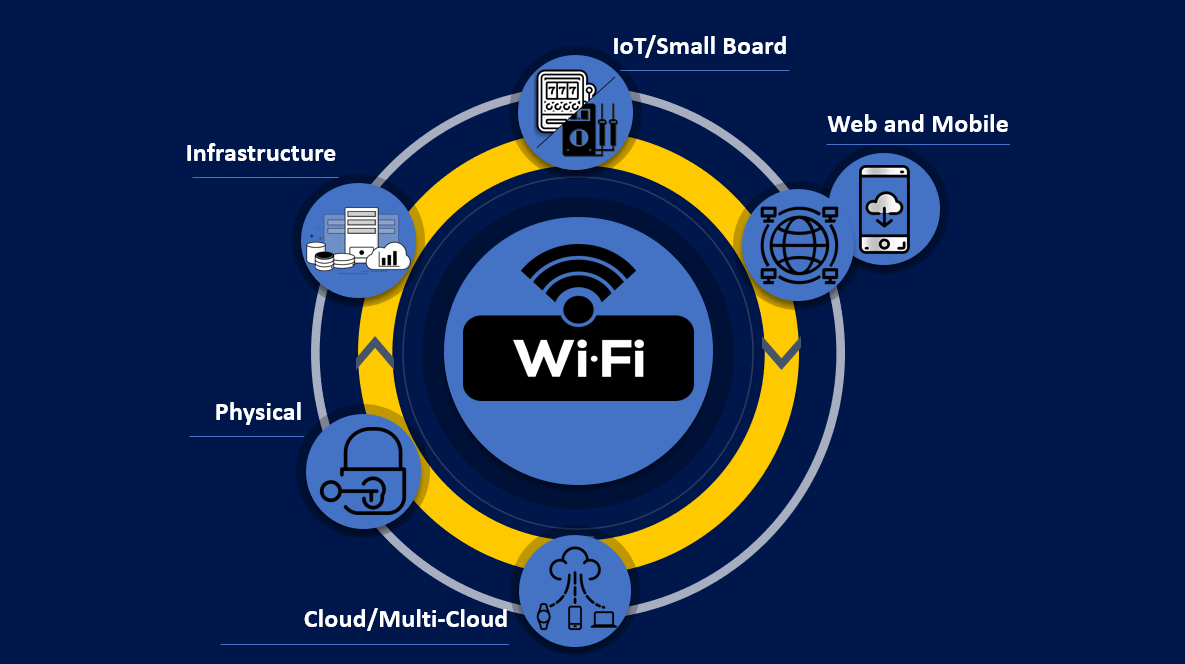
Wireless pentesting has become increasingly prevalent due to widespread Wi-Fi adoption globally. The COVID-19 pandemic accelerated wireless technology adoption, including Wi-Fi and Bluetooth. According to Allied Market Research, the wireless technology market shall reach a mark of $150 billion by 2027 with a steep growth rate of 13 percent annually. This growth creates new security concerns requiring organizations to protect against wireless network interceptions.
What is wireless penetration testing?
Wireless penetration testing evaluates connections between organizational devices and wireless networking mediums. Connected devices include laptops, smartphones, tablets, and IoT equipment. The testing examines wireless services in the physical vicinity, including cellular networks, Wi-Fi, RFID, Bluetooth devices, and wireless peripherals. Penetration tests on wireless security configurations measure resilience against infiltration attempts and threats, providing solutions for updated cybersecurity policies and vulnerability management.
What are the most prevalent risks and vulnerabilities found during wireless pen testing?
Penetration testing identifies loopholes in cybersecurity architecture to prevent actual attackers from accessing internal assets. Wireless pentesting discovers misconfigurations before real hackers exploit them.
Most commonly found vulnerabilities:
- Easily accessible or rogue access points
- Slow or unauthorized data rates
- MAC spoofing
- Man-in-the-middle exploits
- Vendor-supplier defaults
- WEP weaknesses
- DoS attacks
- Spotting untrained users
- Insufficient physical boundaries leading to accidental associations
- Areas susceptible to eavesdropping
- Improperly configured firewalls
- Wardriving risks
- Presence of malware
- Improper encryption
- Unsuitable router setups
- WPA key weaknesses
- Guest Wi-Fi connection risks
What should be the goal of a wireless penetration test?
Every pentest team should understand testing objectives appropriately. Ideally, wireless penetration test aims comprise four aspects:
- Complete comprehension of the risk related to every wireless access point
- Grade the potency of all the wireless security policies
- Dig out and analyze different vulnerabilities
- Create a data-directed action map to reduce risks and rectify identified susceptibilities
Why should businesses think about undertaking wireless pen testing?
Organizations relying on wireless network configurations cannot ignore wireless penetration testing importance. The benefits must outweigh unsecured wireless network dangers.
Top reasons for utilizing wireless pentests:
- Backs the quick identification of rogue access points
Rogue access points are wireless access spots installed on secure networks without administrator authorization. These can act as hazardous attack areas and are often difficult to discover. Wireless pentesting can reveal unwanted rogue access points on networks.
- Enables the detection of default Wi-Fi routers in your entity
Penetration testing helps businesses identify default Wi-Fi routers, ensuring devices connect only via secure lines.
- Offers a detailed insight into the existing vulnerabilities of your wireless network
Unearthing vulnerable points in wireless networks can be time-consuming and complex. Wireless penetration testing experts provide clear pictures of wireless network architecture risks and susceptible areas.
- It helps to secure your Bluetooth connections.
While Bluetooth technology is considered relatively secure, data misuse possibilities exist. Wireless pentesting improves safeguarding of Bluetooth-connected devices.
- Brings forth duplicated or misconfigured wireless networks
Duplicated or misconfigured wireless networks can signify likely data breaches. Penetration testing prevents such instances by building stronger wireless systems.
- Creates a more shielded environment for your team and customers
Many business entities rely on wireless technologies like WLAN and WAP to offer workforce and customer internet services. Regular wireless penetration tests sustain more secure wireless network-driven cultures against illicit access attempts.
- Eases the compliance requirements of diverse regulations
Wireless penetration testing has become a compliance requirement under recognized security regulations like PCI DSS, SOC2, and HIPAA. Skilled pentesting teams ease regulatory compliance processes.
Which forms of organizations might need wireless penetration testing the most?
Specific organizations need regular wireless pen tests more than others:
- Entities relying on IoT-based equipment
- Businesses dependent on smart devices connected to Wi-Fi
- Organizations with sizeable foot traffic on their virtual handles and website
- Entities located in close proximity to unaccounted Wi-Fi connections
What is the usual engagement process for implementing a wireless pentest?
The general methodology categorizes into below-mentioned areas:
Wireless reconnaissance
Pentesters require necessary details before commencing testing projects. Information assimilation is critical to successful wireless pen tests. Testing teams generally prefer wardriving techniques to obtain network details like Wi-Fi, involving sniffing out Wi-Fi signals. This creates inventories of all sensitive data related to networks and access points.
Identification of wireless networks
Next comes diagnosing various wireless networks the client entity uses. The testing team scans different traffic channels to list essential network aspects for testing.
Researching the vulnerabilities involved
The testing team analyzes and creates risk profiles for all recognized wireless networks. This serves as the final preparatory stage before initiating actual simulated attacks. Testers review all weaknesses to conduct tests effectively.
Carrying out the exploit
The pentesting team proceeds to strike vulnerable network configuration zones. They attempt to take system control and access crucial client details.
Performing the post-exploitation requirements
Succeeding initial exploitation comes post-exploitation activities. Testers observe preliminary attack results and carry out further onslaughts if required to discover more weaknesses.
Finishing the client reporting process
After exploitation procedure conclusion, the testing team communicates test results to clients. They report executive summaries regarding network security infrastructure misconfiguration.
Implementing security controls and recovery measures
The ethical hacking team joins clients' internal teams to initiate controls and remediation strategies.
What are the traits of a conducive wireless pen testing partner?
All penetration testing ventures are not ideal matches for businesses. Organizations should understand their requirements and proposed provider expertise. Desirable wireless pen testing companies possess:
- Enables effortless compliance
- Carries pentests unobtrusively
- Offers actionable measures
- Provides root cause analysis
Penetration testing consultants from NaviSec are here to assist you!
NaviSec provides myriad penetration testing needs, including wireless pen-testing. Alliance with skilled cybersecurity consultants helps create robust data protection environments. They offer hands-on testing teams tailored to requisites. Contact today!